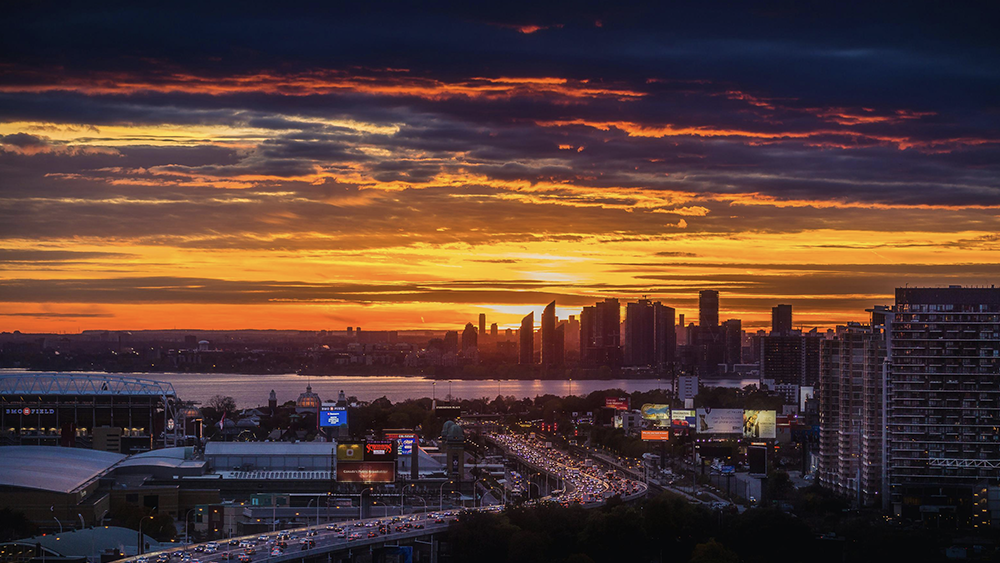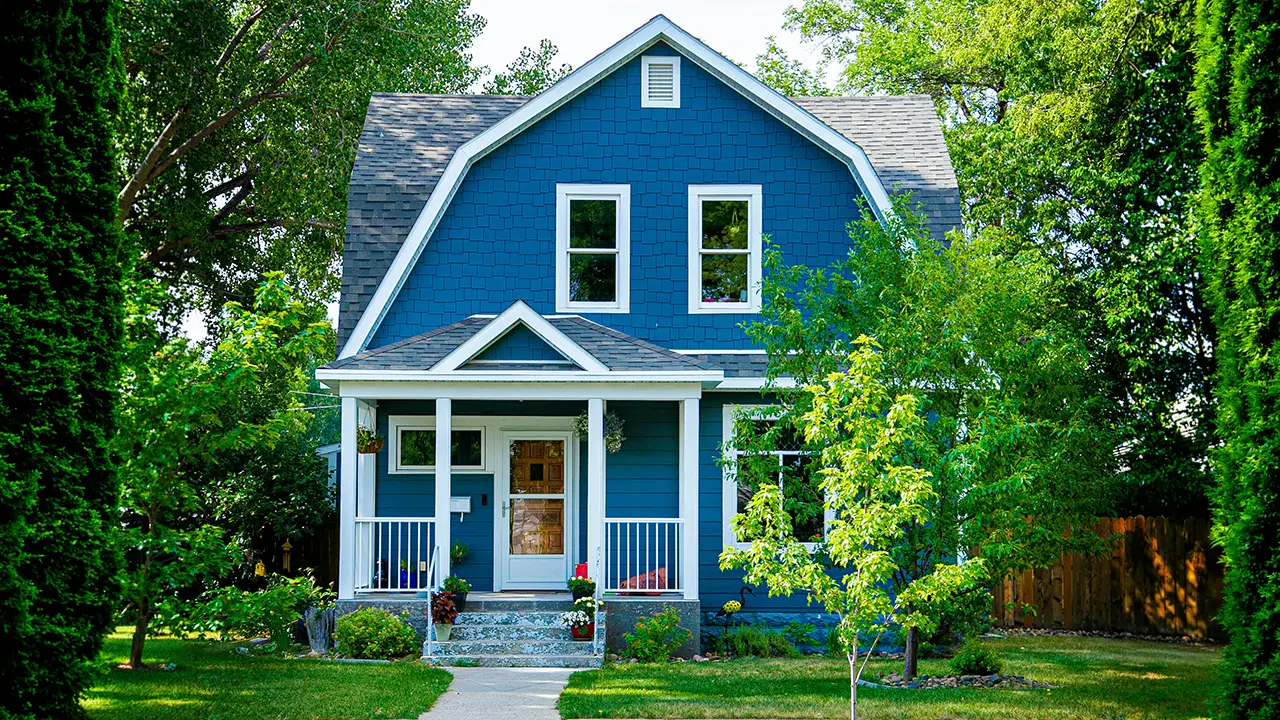
I get some version of this question almost every month: “Marco, should I be looking in Etobicoke or North York?” It usually comes from a buyer who grew up in one part of the city, works downtown, and has never spent much time on the other side of Toronto. There is no single right answer to Etobicoke vs. North York, but there is a right answer for your specific budget, commute, and stage of life.
Both areas sit on opposite edges of old Toronto, connected by the same downtown core but shaped by completely different histories. Etobicoke grew up around the Humber River and Lake Ontario, with postwar bungalows, riverside parks, and a slower pace. North York built itself around Yonge Street and the subway line, turning a quiet suburb into one of the city’s busiest secondary downtowns.
This article walks through how the two compare on price, commute, lifestyle, and schools, and folds in the questions I hear most often from buyers weighing one against the other. By the end, you will have a clearer sense of which side of the city actually fits how you live, not just which one sounds more familiar.
Etobicoke vs. North York: A Quick Comparison for Toronto Home Buyers
If you want the short version: Etobicoke tends to offer more space for your money and easier highway access, while North York offers faster subway commutes and a denser mix of condos, shops, and services within walking distance. Etobicoke stretches from the Humber River to the Mississauga border, bounded by Lake Ontario to the south. North York sits north of Eglinton Avenue, running up to Steeles Avenue, with Yonge Street as its commercial spine.
Families chasing a backyard and a driveway usually lean Etobicoke. Buyers who want to walk to a subway station and skip the car altogether usually lean North York. Neither is objectively better. I have closed deals for happy buyers on both sides of the city this year alone, and the ones who ended up happiest were the ones who picked based on their actual daily routine rather than reputation.
Where Is Etobicoke Located? Is Etobicoke Part of North York?
No, Etobicoke is not part of North York. They are two of the six former municipalities that merged into the amalgamated City of Toronto in 1998, alongside old Toronto, York, East York, and Scarborough. Etobicoke sits on the far west side of the city, while North York occupies the north central section. They do not share a border. Old Etobicoke and old North York each ran their own city council, fire department, and planning office before amalgamation, and you can still feel that history in how differently the two areas are built.
I had a client last spring who assumed a listing in “North Etobicoke” was somehow connected to North York because of the name. It is not. North Etobicoke refers to the northern half of Etobicoke itself, near Finch Avenue West and Highway 27, a completely separate part of the city from North York. Confusing the two is one of the most common mix-ups I run into with buyers relocating from outside Toronto.
Getting to Know North York: From North York Centre Station to East York
North York’s transformation started in earnest in the 1980s, when the city built North York Centre station as an infill stop on the Yonge subway line to serve a growing business district around Yonge Street and Sheppard Avenue. That single planning decision turned Willowdale into a forest of condo towers, and North York Centre today handles roughly 16,700 riders on an average weekday, according to TTC ridership data.
North York is bordered by East York and old Toronto to the south, Vaughan to the west, and Markham and Richmond Hill to the north. East York, a separate former municipality in its own right, sits between North York and the Beaches, and buyers sometimes lump the two together because they share a subway corridor. They are distinct communities with their own character. North York proper covers neighbourhoods like Willowdale, Newtonbrook, Bayview Village, and Don Mills, each with its own mix of postwar houses and newer towers along the major arteries.
Cost of Living and Real Estate Prices in Etobicoke vs. North York
Price is usually the first question buyers ask, and the honest answer is that both areas cover a wide range depending on the street. As of May 2026, the median detached home in Etobicoke sold for $1,280,000, down 8.8 percent from a year earlier, while the median condo sold for $558,750, down 5.8 percent, and the median townhouse sat at $1,225,000. North York’s average sale price across its main districts came in at $896,107 in April 2026 on 238 transactions, a figure that blends everything from Willowdale towers to Don Mills bungalows into one number. That kind of blended average is useful for a general sense of direction, but it hides a lot. A buyer looking at a one-bedroom condo near Sheppard Avenue and a buyer looking at a detached bungalow in Newtonbrook are technically shopping in the same district, even though their budgets and their experience of North York look nothing alike. You can track updated numbers yourself through TRREB’s housing market charts, which get refreshed monthly.
The bigger picture for both areas is that prices have cooled compared to two years ago, which shifts some negotiating leverage back toward buyers for the first time in a while. I tell my clients not to read too much into a single month of data. Look at the trend over two or three quarters instead, and pay closer attention to what is happening on the specific street you are considering than to the borough-wide average.
Is Etobicoke a Wealthy Area?
Parts of it, yes. Neighbourhoods like The Kingsway, Edenbridge-Humber Valley, and Princess-Rosethorn regularly post detached home prices above $2 million, and some streets near the Humber River push past $3 million for larger lots. Other pockets, especially in the West Mall and Six Points area near Kipling station, sell in the $700,000 to $900,000 range for a similar-sized home. I worked with a young couple two years ago who assumed all of Etobicoke was out of reach on their budget, until I showed them a semi-detached near West Mall that cost roughly 40 percent less than a comparable home in The Kingsway ten minutes away. Etobicoke is not one price point. It is a dozen different micro-markets stitched together under one name.
Is North York a Wealthy Area?
Bayview Village and pockets of Don Mills carry some of the highest per-square-foot prices in the entire city, driven by top-ranked schools and proximity to the Bayview subway extension. At the same time, older rental buildings along Finch Avenue and Jane Street keep North York’s overall average lower than you might expect for an area with such expensive enclaves. North York is best understood as a collection of very different income brackets living a few kilometres apart, connected by the same subway line but separated by very different housing stock.
Best Neighbourhoods in Etobicoke: Humber Valley Village, West Mall, and More
Humber Valley Village is probably the neighbourhood I get asked about most. Ravine lots, mature trees, and a genuine sense of privacy despite being fifteen minutes from downtown by car. It is not cheap, but it delivers a suburban feel that is getting harder to find this close to the core. West Mall, just south of Eglinton Avenue West, offers a more affordable entry point with a mix of high-rise apartments, townhomes, and postwar bungalows, plus easy access to Sherway Gardens for shopping.
Long Branch, tucked into the southwest corner near the Mississauga border, has kept a small-town, walkable main street feel along Lake Shore Boulevard. Mimico, right next to it along the waterfront, has seen a wave of new condo towers rise along the Mimico Creek and Lake Ontario shoreline over the past decade. If you want a broader tour of what living day to day in the area actually looks like, I put together a full breakdown of living in Etobicoke that covers the commute, the parks, and the local schools in more depth, along with a separate guide to the best neighbourhoods in Etobicoke for buyers still narrowing down a street.
Is North York a Nice Area in Toronto? What Residents Say About Living There
Yes, and the reasons vary a lot by neighbourhood. Families in Don Mills point to the ravine trails and the redeveloped Shops at Don Mills as reasons they never want to leave. Renters in Willowdale like being able to walk to a subway station, three grocery stores, and a dozen restaurants without ever touching a car. What residents tend to agree on is that North York feels less like a suburb bolted onto Toronto and more like a second downtown, with its own skyline visible from the 401.
The trade-off is density. Streets around Yonge and Sheppard can feel busy at almost any hour, and parking near the condo towers is tighter than in most of Etobicoke. For buyers who want energy and convenience over quiet and space, that trade-off is worth it. For buyers who want the opposite, it usually is not.
Old Toronto Charm vs. North York’s Growing Condo Market
Neither Etobicoke nor North York is technically “old Toronto.” That label belongs to the pre-amalgamation City of Toronto, roughly bounded by the Humber River, Lake Ontario, the Don River, and Eglinton Avenue. Both Etobicoke and North York sit outside that original boundary, though buyers use “old Toronto charm” loosely to describe mature, tree-lined streets with character homes, and both areas have pockets that qualify.
Etobicoke’s older sections, particularly around Old Mill and The Kingsway, have that character in spades: century homes, curved streets, and a canopy of trees that took decades to grow. North York’s older bungalow streets, especially in Newtonbrook and parts of Bayview Village, have a similar postwar charm, but the area’s identity today is shaped far more by its condo boom. Cranes along Yonge Street have been a constant feature of the North York skyline for over fifteen years, and that construction shows no sign of slowing given how much of the corridor is still zoned for higher density.
Commuting and Transit: Etobicoke’s Highways vs. North York’s Subway Access
Etobicoke was built around the car. The Gardiner Expressway and Highway 427 cut through the area, giving quick access to the airport and the western GTA, and most residential streets were designed with driveways and garages in mind. Transit exists, including Line 2 service through Kipling and Islington stations at the eastern edge of the borough, but a lot of Etobicoke still functions best with a vehicle in the driveway. According to TTC’s station information, Islington station has served as a western subway terminus since 1968, long before the line extended further to Kipling.
North York flips that script. Line 1 runs straight through the middle of the borough, and North York Centre station was purpose-built to serve the business district growing up around it after the original Yonge line was already running, a rare example of a subway system building a station into an existing tunnel. Add GO Transit access at Old Cummer and Oriole, and a resident of Willowdale can realistically get downtown in under thirty minutes without ever starting a car. That difference alone drives a meaningful share of the price gap between similar-sized units in each area, since transit access is one of the strongest predictors of condo value in this city.
None of this means Etobicoke residents are stuck in traffic forever. The Kipling Mobility Hub, which links the subway, GO Transit, and regional bus service into one connected station, has slowly turned the western edge of the borough into its own transit-oriented pocket. It is a smaller version of what happened around North York Centre decades earlier, just a few years behind.
Parks, Waterfront, and Green Space on the Etobicoke Side
This is where Etobicoke pulls ahead for a lot of families. Colonel Samuel Smith Park and Humber Bay Park sit right on Lake Ontario, with trails, gardens, and views that rival anything downtown at a fraction of the crowd. The Humber River trail system runs the length of the borough, connecting smaller parks like James Gardens and Etienne Brule Park into one long green corridor that you can walk or cycle for kilometres without crossing a major road.
Centennial Park, near West Mall, adds a ski hill, a conservatory, and sports fields into the mix, something you rarely see packed into one green space this close to a major city. If waterfront access and large parks are near the top of your list, Etobicoke has a real edge over most of the rest of Toronto, North York included.
Shopping, Restaurants, and Everyday Life in North York
North York’s strength is density done well. The Yonge and Sheppard corridor packs grocery stores, banks, medical offices, and restaurants into a walkable stretch that most Etobicoke neighbourhoods cannot match without a car. Bayview Village Shopping Centre serves the east end of the borough, while the redeveloped Shops at Don Mills has become a genuine gathering spot with outdoor seating, boutique retail, and a farmers market in the warmer months.
For food, North York’s restaurant scene along Steeles Avenue and around Finch reflects the borough’s diversity, with strong Persian, Korean, and Chinese options in particular. It is a different kind of everyday life than Etobicoke’s, built around walking to what you need rather than driving to a plaza.
Schools and Family-Friendly Living in Etobicoke and North York
Both areas fall under the Toronto District School Board, and both have a mix of strong and average schools depending on the exact street. Etobicoke families often point to schools around Humber Valley Village and Islington-City Centre West, paired with larger lot sizes that make backyard play and multi-generational living easier to pull off. North York’s draw for families centres on Bayview Village and Don Mills, where school reputations run strong and buyers are often willing to pay a premium specifically for a catchment boundary.
I helped a family last year choose between a semi-detached in Etobicoke’s Alderwood neighbourhood and a townhome near Bayview Village. They ended up in Alderwood, mostly because the extra outdoor space mattered more to them than the shorter commute, and they have told me since that the decision only got easier to live with once their kids started using the yard every single day after school.
Real Estate Market Trends: Which Area Is Better for Buyers Right Now?
Both markets have softened over the past year, which is good news if you are buying and less welcome if you already own. Etobicoke’s median detached price fell 8.8 percent year over year as of May 2026, giving buyers noticeably more negotiating room than they had in 2024. North York’s average sits lower overall at just under $900,000 across its combined districts, though that number gets pulled down by the sheer volume of condo sales relative to detached homes.
For buyers focused purely on value right now, Etobicoke’s price softening in the detached segment makes it worth a serious look, especially in the West Mall and Six Points pockets. For buyers prioritizing long-term transit-driven appreciation, North York’s subway access remains one of the more defensible long-term bets in the city, condo price dip and all.
So, Which Side of Toronto Should You Choose: Etobicoke or North York?
If you made it this far, the honest answer is that Etobicoke and North York solve different problems. Etobicoke rewards buyers who want space, waterfront access, and a car-friendly layout, with real affordability if you know which pockets to target. North York rewards buyers who want subway access, walkable density, and a second downtown energy without downtown prices. I have sent buyers happily in both directions this year, and the ones who second-guessed themselves afterward were almost always the ones who chose based on which area sounded more prestigious rather than which one matched their actual weekly routine.
Whether you are comparing a semi-detached near Humber Valley Village against a condo near North York Centre, or you are just starting to figure out which side of Toronto fits your life, that is exactly the kind of decision I help buyers work through every week.
I’m Marco Pedri, and I focus specifically on helping buyers weigh Etobicoke against North York and the rest of Toronto’s west and central neighbourhoods, from that first shortlist of areas through to the closing table. I’m committed to honest advice, real local market insight, and walking you through every step with a clear head, especially when a decision comes down to two areas that look similar on paper but live completely differently day to day.
If you are torn between these two sides of the city, or any other Toronto neighbourhoods, I would be glad to talk through what actually matters for your situation. Feel free to reach out to me directly and we can put together a shortlist that fits your budget and your daily life, not just your Google search history.